

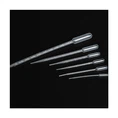
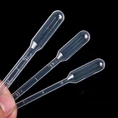
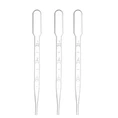
Preparation Phase: Inspect the Pasteur pipette to ensure it is intact and that the graduations are clearly legible. If sterile conditions are required, open the individually sealed packaging inside a clean bench (laminar flow hood), taking care to avoid direct hand contact with the pipette tip. For non-sterile pipettes, disinfection may be performed by wiping them down with alcohol.
Liquid Aspiration: Insert the Pasteur pipette vertically into the liquid, then gently squeeze the rubber bulb or use a mechanical pipetting aid to draw up the fluid. It is recommended to maintain an aspiration rate of 1–2 mL per second to prevent the formation of air bubbles. When reading the volume, position your eyes level with the liquid meniscus to minimize parallax errors. For pipettes featuring fine 0.1 mL subdivisions, the operation should be performed slowly and with precision.
Transfer and Dispensing: Move the Pasteur pipette to the target container and slowly dispense the liquid; you may gently touch the tip against the container wall to minimize residual fluid. Potential hazards include: excessive squeezing, which may cause liquid splashing (particularly with corrosive substances), or improper disposal after use, which could lead to cross-contamination. Following the experiment, disposable pipettes must be discarded into designated biohazard or chemical waste containers and must not be reused.
Storage Conditions: Unused Pasteur pipettes should be stored in a dry environment, protected from light. The recommended storage temperature is 15–25°C; avoid exposure to high temperatures or excessive humidity, as these conditions may compromise the material's stability.