


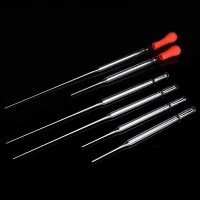


The history of the Pasteur pipette is a fascinating journey that intertwines scientific innovation, practical necessity, and the evolution of laboratory techniques. This simple yet indispensable tool has played a crucial role in various scientific fields, from microbiology to chemistry, and its development is a testament to the ingenuity of scientists over the years.
Origins and Early Development
The story of the Pasteur pipette begins in the 19th century, a time of great scientific discovery and advancement. Louis Pasteur, a French chemist and microbiologist, is widely credited with the invention of the pipette that bears his name. Pasteur was a pioneer in the field of microbiology, and his work on fermentation, pasteurization, and the germ theory of disease revolutionized the way we understand and treat infectious diseases.
In his research, Pasteur needed a reliable and precise way to transfer small volumes of liquids. He developed a simple glass tube with a narrow tip and a rubber bulb at one end. This design allowed him to draw up and dispense liquids with great accuracy, making it an ideal tool for his experiments. The pipette was named after Pasteur in recognition of his contributions to science and his role in its development.
Design and Function
The basic design of the Pasteur pipette has remained largely unchanged since its invention. It consists of a long, thin glass tube with a tapered tip at one end and a rubber bulb at the other. The bulb is used to create a vacuum, which draws the liquid into the tube. When the bulb is released, the liquid is dispensed from the tip.
The pipette can be used to transfer a variety of liquids, including water, chemicals, and biological samples. It is particularly useful for transferring small volumes of liquid, typically in the range of a few microliters to a few milliliters. The narrow tip of the pipette allows for precise control of the liquid flow, making it ideal for applications such as cell culture, microscopy, and chemical analysis.
Types of Pasteur Pipettes
Over the years, several different types of Pasteur pipettes have been developed to meet the specific needs of different applications. Some of the most common types include:


- Disposable Glass Pasteur Pipettes: These pipettes are made of glass and are designed for single-use applications. They are sterile and can be used to transfer a variety of liquids, including biological samples and chemicals. Disposable Glass Pasteur Pipettes are a popular choice in many laboratories due to their convenience and affordability.
- Graduated Pasteur Pipettes: These pipettes are marked with volume graduations, allowing for more precise measurement of the liquid being transferred. They are commonly used in applications where accurate volume control is required, such as in chemical analysis and cell culture. Graduated Pasteur Pipette are available in a variety of sizes and volumes to meet the needs of different applications.
- Pasteur Pipette 230mm: This is a specific type of Pasteur pipette with a length of 230mm. It is commonly used in applications where a longer pipette is required, such as in deep well plates or large containers. Pasteur Pipette 230mm provides increased reach and flexibility, making it a useful tool in many laboratory settings.
Applications in Science
The Pasteur pipette has a wide range of applications in various scientific fields. Some of the key applications include:
- Microbiology: In microbiology, the Pasteur pipette is used to transfer small volumes of bacterial or fungal cultures, as well as to inoculate media with specific microorganisms. It is also used for the extraction of DNA and other biological samples.
- Chemistry: In chemistry, the pipette is used for the precise transfer of chemicals and reagents. It is particularly useful in titration experiments, where accurate volume control is essential for obtaining reliable results.
- Biology: In biology, the Pasteur pipette is used for cell culture, microscopy, and the manipulation of biological samples. It is also used for the transfer of small volumes of enzymes, antibodies, and other biological molecules.
Advancements and Innovations
In recent years, there have been several advancements and innovations in the design and functionality of the Pasteur pipette. These include the development of disposable pipettes made from plastic, which are more cost-effective and environmentally friendly than glass pipettes. Additionally, some pipettes now come with features such as graduated markings, filters, and ergonomic designs to improve accuracy and ease of use.
Conclusion
The Pasteur pipette is a simple yet powerful tool that has had a profound impact on scientific research and experimentation. Its invention by Louis Pasteur in the 19th century revolutionized the way we transfer and manipulate small volumes of liquids, and it continues to be an essential tool in laboratories around the world.
As a Pasteur pipette supplier, we understand the importance of providing high-quality products that meet the needs of our customers. Our range of Disposable Glass Pasteur Pipettes, Graduated Pasteur Pipettes, and Pasteur Pipette 230mm are designed to provide accurate and reliable performance, making them ideal for a wide range of applications.
If you are interested in learning more about our Pasteur pipettes or would like to discuss your specific requirements, please feel free to contact us. We are committed to providing excellent customer service and look forward to helping you with your laboratory needs.
References
- Pasteur, L. (1861). Mémoire sur la fermentation alcoolique. Annales de Chimie et de Physique, 6th series, 24, 426-461.
- Lide, D. R. (Ed.). (2004). CRC Handbook of Chemistry and Physics (85th ed.). CRC Press.
- Atlas, R. M., & Bartha, R. (1998). Microbial Ecology: Fundamentals and Applications (4th ed.). Benjamin Cummings.