

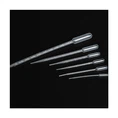
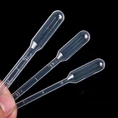
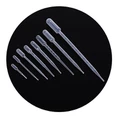
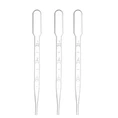
Pasteur pipettes are frequently used in laboratories for the precise transfer of small liquid volumes, finding widespread application in fields such as genetics, pharmaceuticals, disease prevention, clinical diagnostics, and biochemistry.
Preparation:
Before use, ensure that the Pasteur pipette is intact and undamaged-free from cracks, deformation, or contamination.
Perform necessary cleaning and sterilization of the pipette to minimize the risk of contamination. During cleaning, an appropriate cleaning agent may be used; for instance, the pipette can be soaked in the agent for a period, scrubbed with a brush, and then dried using a paper towel.
Proper Handling:
Hold the Pasteur pipette with your right hand and the rubber bulb (or rubber ball) with your left. Ensure that your fingers grasp the pipette at a position above the graduation marks to avoid significantly altering the temperature of the glass tube, which could compromise experimental accuracy.
Drawing Up Liquid:
Immerse the tip of the Pasteur pipette into the liquid, then release your fingers to allow the air inside the pipette to escape.
Gently press the rubber bulb with your fingers to draw the liquid into the pipette. Take care to avoid drawing up air bubbles, as this could compromise the accuracy of the experimental results.
Once the liquid has been drawn up to the desired level, release the rubber bulb, allowing it to naturally return to its original shape. Exercise caution regarding the pressure applied to avoid crushing the pipette.
Transferring Liquid:
When transferring liquid, hold the Pasteur pipette suspended in the air directly above the receiving container. Avoid contact with the container walls to prevent contaminating the pipette or the reagents.
Maintain a steady hand throughout the transfer process to prevent the liquid from splashing or spilling.
Taking Readings:
When reading the liquid volume, ensure that your line of sight is level with the bottom of the liquid meniscus (the concave surface) inside the pipette to ensure reading accuracy.