

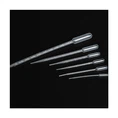
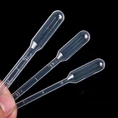
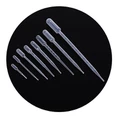
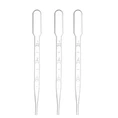
Pasteur pipettes-also known as transfer pipettes-are manufactured from transparent low-density polyethylene (LDPE) material. They are designed for operations involving small volumes of liquid, such as aspiration, transfer, or transport, in applications ranging from cell-based assays and clinical testing to cloning experiments.
Compared to glass alternatives, these plastic pipettes significantly reduce the loss of cells and proteins due to adsorption.
The shatterproof plastic construction eliminates the risk of injury or infection during use. Furthermore, they can be heat-sealed to ensure secure transport or storage.
Featuring a one-piece, integrated design, these pipettes eliminate the hassle of attaching or detaching a separate rubber bulb, thereby enhancing operational efficiency.
While product descriptions or usage contexts may vary slightly, they all refer to the same type of disposable plastic pipetting tool commonly used in laboratories. Typically manufactured from polyethylene (PE) or low-density polyethylene (LDPE), these tools are utilized for the aspiration, transfer, or mixing of small volumes of liquid.