

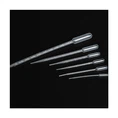

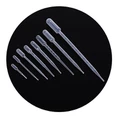
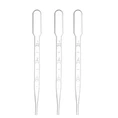
The Pasteur pipette-a seemingly insignificant laboratory and medical supply-has, through its unique design and exceptional performance, emerged as a pivotal player in the microscopic realm and in precision operations, quietly contributing its strength to human health and scientific advancement.
In the context of medical diagnostics, the Pasteur pipette serves as an essential tool for sample collection and processing.
In clinical laboratory settings, healthcare professionals routinely utilize Pasteur pipettes to collect patient samples, such as blood, urine, and sputum.
Its tapered tip allows for the effortless puncture of the sealed membranes on collection tubes or enables it to reach deep into sample containers to aspirate specimens; meanwhile, the design of the rubber bulb facilitates precise control over the aspiration volume, thereby preventing sample wastage or contamination.
Once collected, samples can be transferred via the Pasteur pipette into test tubes or analytical instruments for subsequent analysis and testing.
Pasteur pipettes are equally indispensable throughout the processes of vaccine research, development, and production.
During the stages of cell culture and viral amplification, where the precise addition of culture media and reagents is required, Pasteur pipettes effectively meet these high-precision demands.
Furthermore, during the vaccine dispensing process, Pasteur pipettes enable the accurate aspiration of vaccine solutions for aliquoting into vials, thereby ensuring the precise and consistent dosage of every individual vial-a critical factor in safeguarding both the quality and safety of the vaccine.